






You might be on track to build the next Amazon. But if accessibility isn’t a priority, you’re not just missing out on customers — you could be heading toward serious legal trouble. Starting June 28, 2025, Non-compliance with accessibility regulations like the European Accessibility Act (EAA) can lead to significant legal and financial consequences, including potential fines and restricted market access within the EU.
But don’t panic just yet. You might wonder: Is EAA a boon or a burden? Is accessibility really necessary? What happens if my site isn’t accessible?
The truth is, accessibility isn’t just a legal requirement — it’s a massive economic opportunity.
Consider this:
- In the EU, 77% of internet users have made online purchases.
- 1 in 4 adults in the EU lives with a disability.
That’s a huge portion of your potential customer base that you can’t afford to ignore.
Still not convinced? In 2023, consumers in the U.S. spent $1.14 trillion online. Imagine the share of disabled consumers within that number — the opportunity is too big to overlook.
Accessibility isn’t just compliance. It’s growth, inclusion, and smart business.
Accessibility: A Non-Negotiable for Customer Journey
Imagine yourself as a user eager to buy a book from a local bookstore. You arrive, only to find the entrance is up a steep set of stairs with no ramp or alternative way in. You’re stuck outside, unable to explore or purchase anything. This is exactly what happens to a disabled user who visits your E-commerce site to make a purchase, only to discover it’s inaccessible. It’s critical to recognize that a significant number of users abandon websites due to this very issue. Turning to the giant in the room, we know accessibility is essential, but how do we ensure it across our platforms?
The user journey is how visitors interact with your site. For users with disabilities, this journey can be challenging if the site isn’t accessible. A smooth experience for some can be a barrier for others. If your website isn’t accessible to all, it’s like having an online store that’s impossible to shop from — visible but ultimately useless. You might as well make more money by selling it on the street.
Key Accessibility Issues in E-commerce
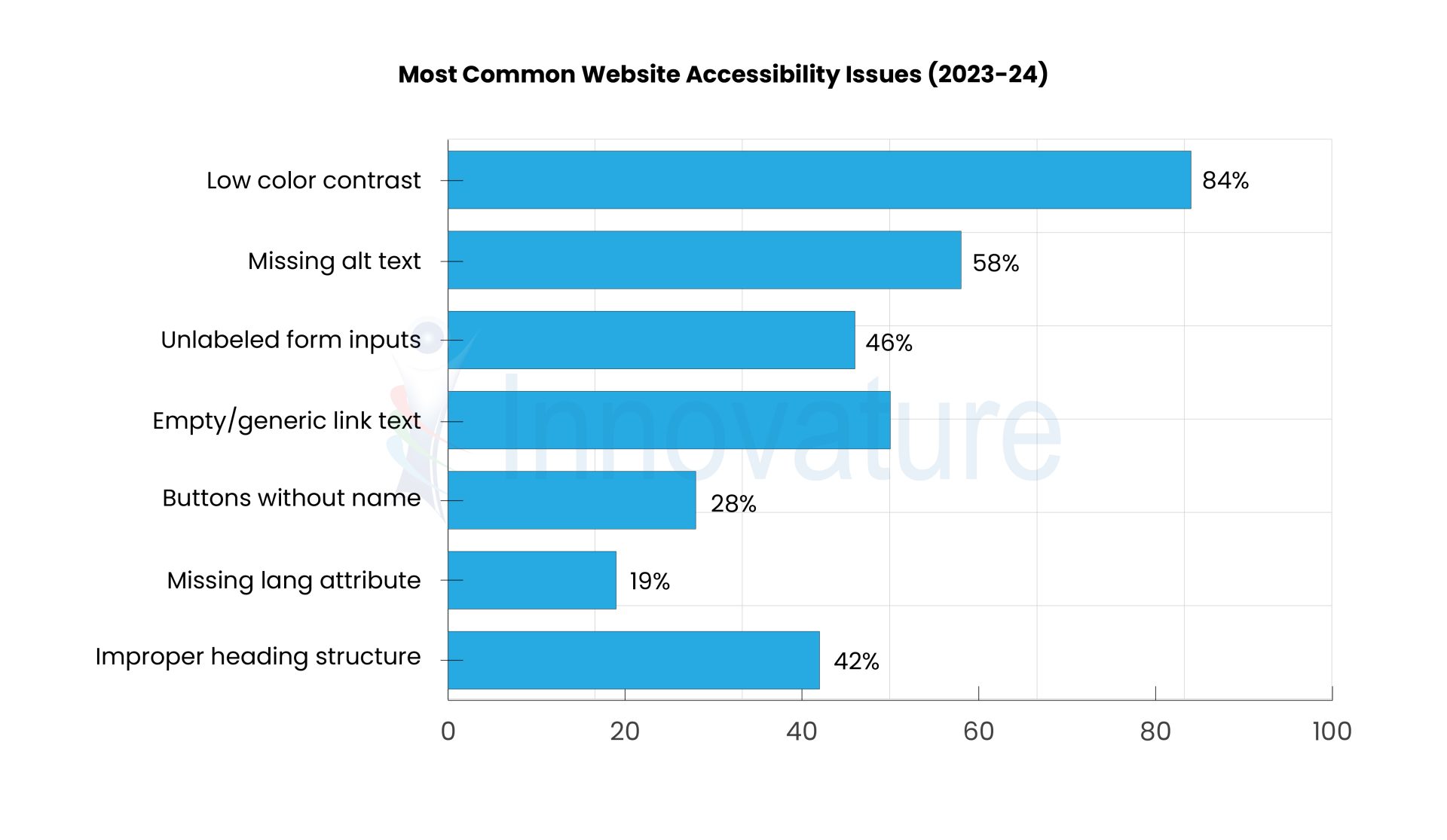
Site accessibility issues vary for different users. For some, it may be poor navigation for screen readers; for others, it could be inadequate color contrast. Here are some common issues that could be hindering your site’s accessibility:
Poor Navigation for Screen Readers
Many E-commerce sites have complex menus or poor labeling, making it difficult for screen readers to interpret content. This prevents visually impaired users from completing their purchases.
Lack of Keyboard Accessibility
Users who rely on keyboards instead of a mouse might struggle with websites that don’t support keyboard navigation. This limits their ability to interact with essential site features like checkout forms or product filters.
Inadequate Color Contrast
Low contrast between text and background makes it hard for users with visual impairments to read important information like product descriptions, prices, or calls to action.
Missing Alt Text for Images
Images without descriptive alt text are invisible to screen readers, leaving users unable to understand what’s being presented visually, such as product images or promotional banners.
How to Make Your E-commerce Site Accessible
Start with an accessibility test
You could begin by conducting a thorough audit of your site, making use of tools such as WAVE or Google Lighthouse to identify accessibility issues. You can always hire accessibility experts to ensure compliance with the latest standards.
Implementing WCAG Guidelines
The Web Content Accessibility Guidelines (WCAG) are global standards for web accessibility. Following their recommendations ensures that our site is usable by people with disabilities. Key areas include:
- Ensuring that there is an alt text for all images.
- The entire website is fully navigable using a keyboard.
- The content is well written in terms of readability, color contrast, and letter font size.
Using clear and understandable language
Another thing is to avoid the usage of jargon, hindering common users from being able to use the website. This also means to ensure that instructions are easy to understand and follow, especially around check-out pages.
Continuous Testing
Accessibility is not something that we do once and get over with. Regularly test your website using automated tools and feedback from real users to spot errors on the site.
Accessibility and User Convenience
One of the most overlooked aspects when building an E-commerce platform is the small details that significantly impact user experience. Take, for example, a store selling shoes. A particular shoe might be available in multiple colors, but if there’s no image description or alt text to clarify the color options, a user—especially one relying on screen readers—could easily get confused.
They might purchase the product thinking it’s one color, only to receive another. This leads to returns, refund requests, and in some cases, even legal complaints. For the company, this isn’t just a logistical headache—it could mean paying fines for failing to meet accessibility standards, on top of losing customer trust.
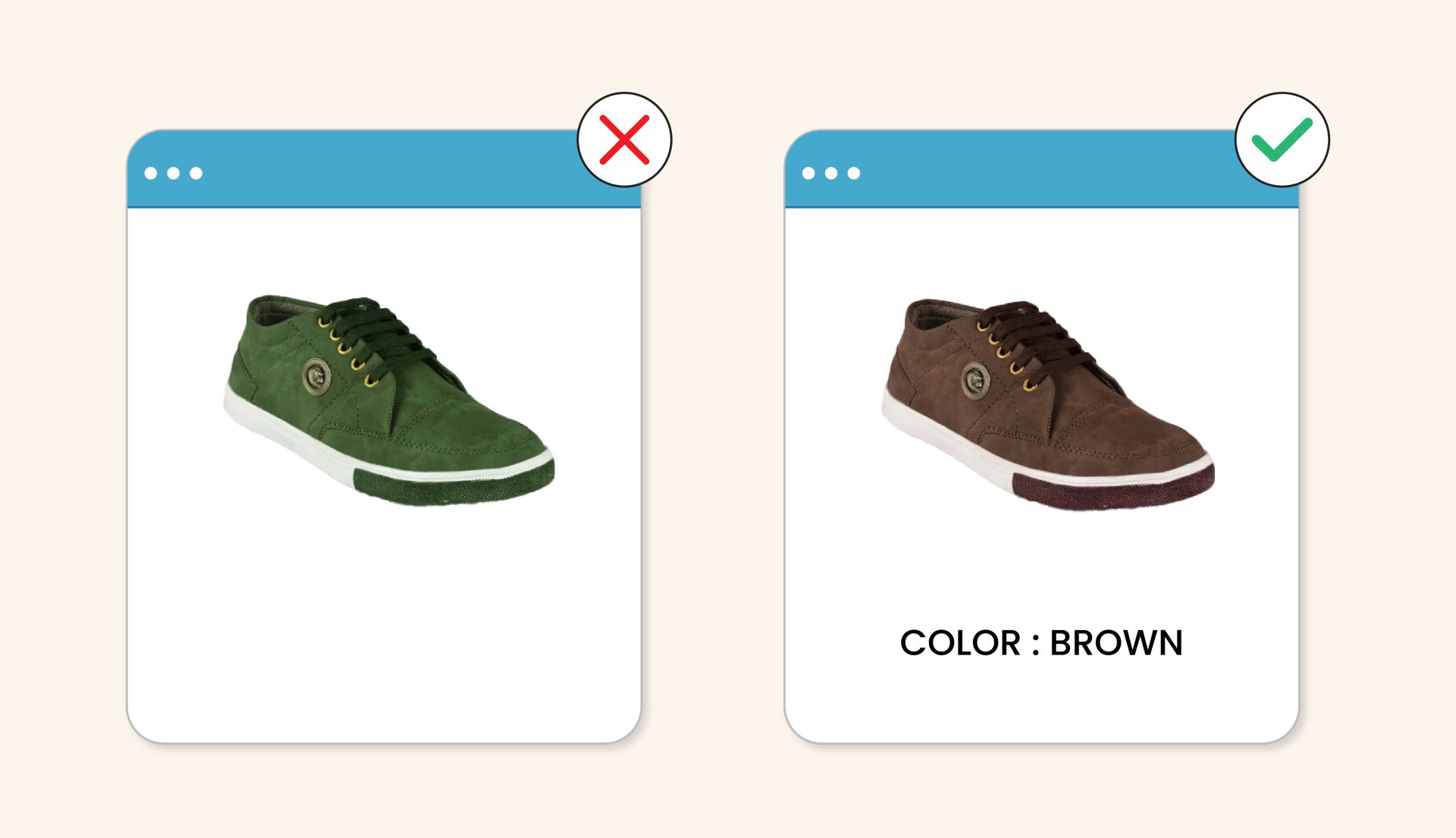
In the image above, you can see that a pair of shoe includes its color, making it easier for users—especially those using assistive technologies—to understand the product and make a purchase decision. This reflects the brand’s commitment to inclusivity and its effort to implement strong accessibility practices.
Here are some key benefits of having an accessible E-commerce site:
- Wider Audience Reach: Accessible websites cater to a broader audience. Disabled consumers represent a significant portion of global buying power, and improving accessibility ultimately drives better business outcomes.
- Enhanced Employee and Customer Engagement: Accessibility features not only support users but also improve employee engagement and internal usability—leading to higher conversions and stronger customer loyalty.
- Improved SEO: Search engines favor well-structured, accessible websites, boosting your site’s visibility and ranking in search results.
- Regulatory Compliance: With upcoming regulations like the EAA, ensuring your website meets accessibility standards protects you from legal risks and potential fines.
Accessibility: A Business Growth Strategy, Not Just a Legal Requirement
With over one billion people worldwide living with some form of disability, ignoring such a vast audience isn’t just unwise—it’s a missed business opportunity.
If you’re a business owner considering accessibility, now is the time to act—especially with the European Accessibility Act (EAA) deadline approaching at the end of June.
But don’t let it overwhelm you. You don’t need to overhaul your entire website overnight. Start small:
- Fix the most critical issues first, like keyboard navigation und alt text for images.
- Then, gradually address more complex accessibility improvements.
And if it feels like a lot for your team to handle internally, there are accessibility experts ready to support you every step of the way.
So don’t wait—because delaying action could cost you more than compliance.