Introduction
The EU Deforestation Regulation (EUDR) is often discussed as a compliance requirement. In reality, it is doing something far more structural. It is forcing a redesign of how cocoa and coffee supply chains operate.
This is no longer about submitting documentation. It is about proving, with verifiable data, where products come from and how they were produced. For industries built on fragmented sourcing and layered intermediaries, that shift is significant.
Understanding the Cocoa and Coffee Supply Chain
A typical cocoa or coffee supply chain includes:
- Smallholder farmers
- Local aggregators or cooperatives
- Exporters
- Processors and manufacturers
- EU importers and retailers
At each stage, products are aggregated, mixed, and redistributed. This has historically worked for scale and efficiency—but it comes at the cost of traceability. EUDR challenges this model directly.
The Problem: Supply Chains Built Without Traceability
The supply chain being complex and multi-layered, creates its own issues at the core:
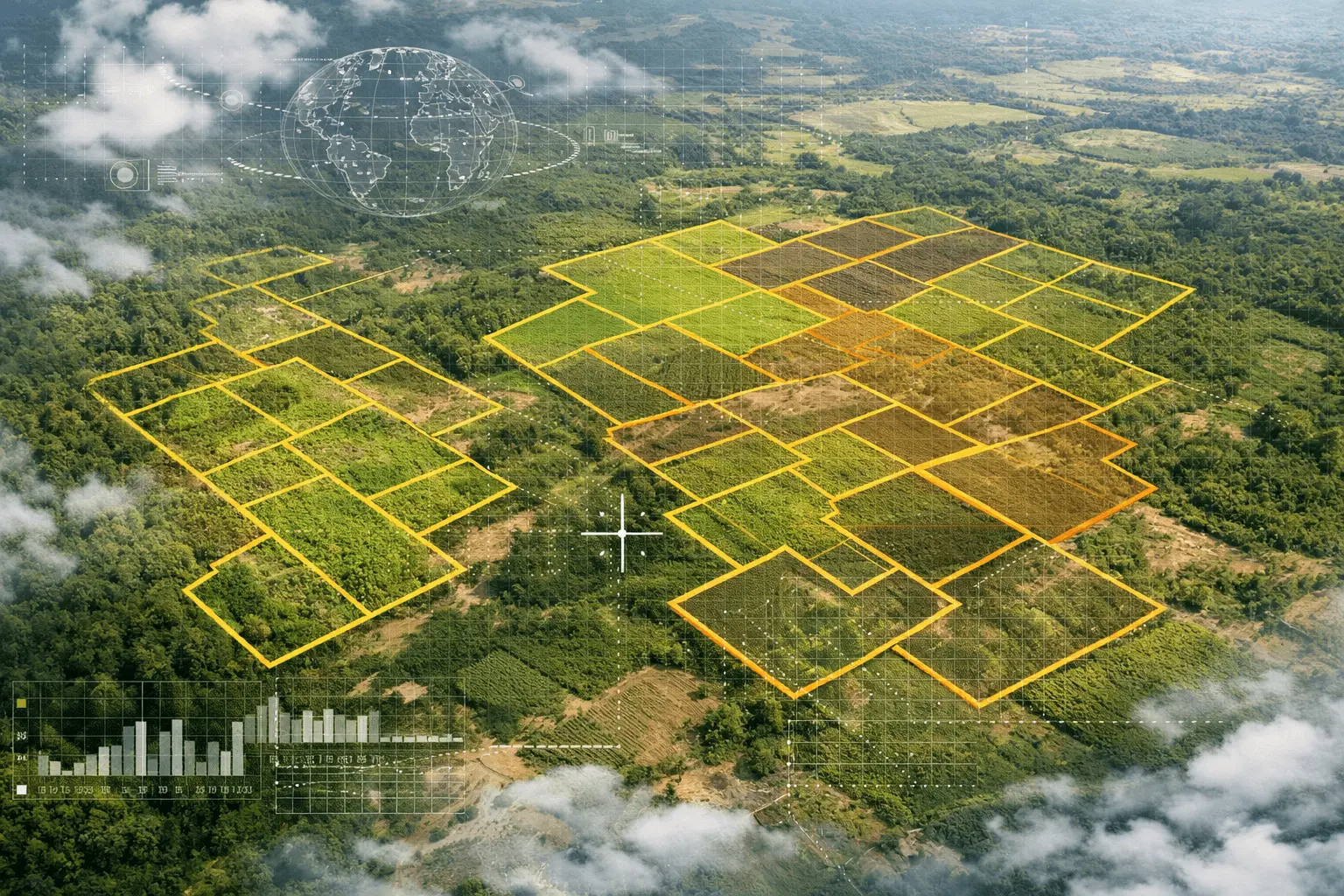
- Fragmented Data at the Source : This means that there are no standardized farm-level data which limits geolocation records and informal tracking methods. As explored in our earlier analysis on the geospatial data challenges under EUDR, managing and validating this data at scale introduces significant complexity for enterprises.
- Visibility Loss Through Aggregation: When the produce from multiple sources are mixed, it becomes difficult to track the source of origin and hence verification becomes an issue.
- Inadequate Systems for Compliance: The practise of using legacy systems including spreadsheets and in general disconnected tools across stakeholders result in traceability being not audit- ready.
Evaluation: Why EUDR Breaks the Existing Model
EUDR introduces a fundamental requirement:
- Proof of origin at the farm level
- Evidence that sourcing is not linked to deforestation
- Audit-ready due diligence records
This creates pressure across the supply chain. The real change with EUDR is that:
- Regional sourcing is no longer enough
- Aggregation without traceability becomes a risk
- Suppliers without verifiable data face exclusion
This shift is already visible in the Cocoa and Coffee markets, by buyers prioritizing traceable suppliers, consolidation of supplier network, and increased scrutiny on exporters and traders.
Source: EU’s New Anti-Deforestation Rules Set to Reshape Global Coffee and Cocoa Markets, See News, May 2026
The Direction of Solution: Building Traceable Supply Chains
This involves four key capabilities:
- Farm-Level Data Capture
- Geolocation (polygon-level where required)
- Farm metadata and ownership details
- Digitized records at the source
- Structured Supplier Onboarding
- Standardized data collection processes
- Validation at entry point
- Continuous updates and monitoring
- Traceability Across the Chain
- Linking farm → aggregator → exporter → buyer
- Maintaining data continuity across transactions
- Avoiding loss of origin during aggregation
- Compliance Workflows
- Automated due diligence checks
- Integration with deforestation datasets
- Audit-ready reporting systems
The outcome is a supply chain that can prove origin – not just declare it.
The Angle of Digital Transformation
This being more than an compliance exercise, it is seen as a transition from fragmented operations to data-driven supply chain infrastructure. Digital transformation enables:
- Centralized data platforms to unify fragmented inputs
- Scalable processing of geospatial and supplier data
- Workflow automation for compliance and validation
- Real-time visibility across sourcing networks
For organizations navigating these changes, the challenge is not just adopting new tools but designing systems that can operate at scale across fragmented supply chains. As a data and AI partner, Innovature works with enterprises to build traceability frameworks, unify supply chain data, and implement compliance-ready workflows aligned with regulations like EUDR.
Conclusion
EUDR is redefining how cocoa and coffee supply chains operate. It is no longer enough to source at scale. Organizations must now verify, trace, and prove compliance at every stage. For companies operating in these sectors, the priority is clear: move from fragmented sourcing models to structured, verifiable, and digitally enabled supply chains.