






€5,000 to €20,000 might be the price you end up paying if your website is not compliant with the EAA by the end of June. Sounds like a lot, ain’t it, mate?
But wait, there’s more! Creating a digital product isn’t just about a sleek design, smooth UX, and classy UI. It’s about building an inclusive product.
Last year, Booking.com was the most visited travel website, with over 500 million visits. Yet, despite its popularity, it – along with other travel sites – has significant accessibility issues. According to a study by the non-profit WebAIM, which assessed website inclusivity, travel websites ranked the worst, with their homepages averaging over 60% accessibility errors.
Now, more interestingly, this issue isn’t limited to the travel and tourism industry. It is widespread across sectors, and as the EAA deadline looms, businesses are at risk of paying hefty fines for not making their sites accessible.
What is the EAA?
Before we debate whether the European Accessibility Act (EAA) is a boon or a burden, let’s first understand who it impacts — and spoiler alert: it’s almost everyone offering a digital product or service in Europe.
The EAA is a directive introduced by the European Union to ensure that key digital products and services — including websites, mobile apps, e-commerce platforms, banking services, e-readers, and more — are accessible to people with disabilities.
With the compliance deadline set for June 28, 2025, businesses across industries must align their digital experiences with accessibility standards like WCAG 2.1.
This isn’t your average checkbox exercise — it directly impacts your business operations. Come June 2025, if your online presence isn’t accessible, you might as well be invisible. Because if people can’t use your site, there’s not much point in keeping the digital doors open. Is there?
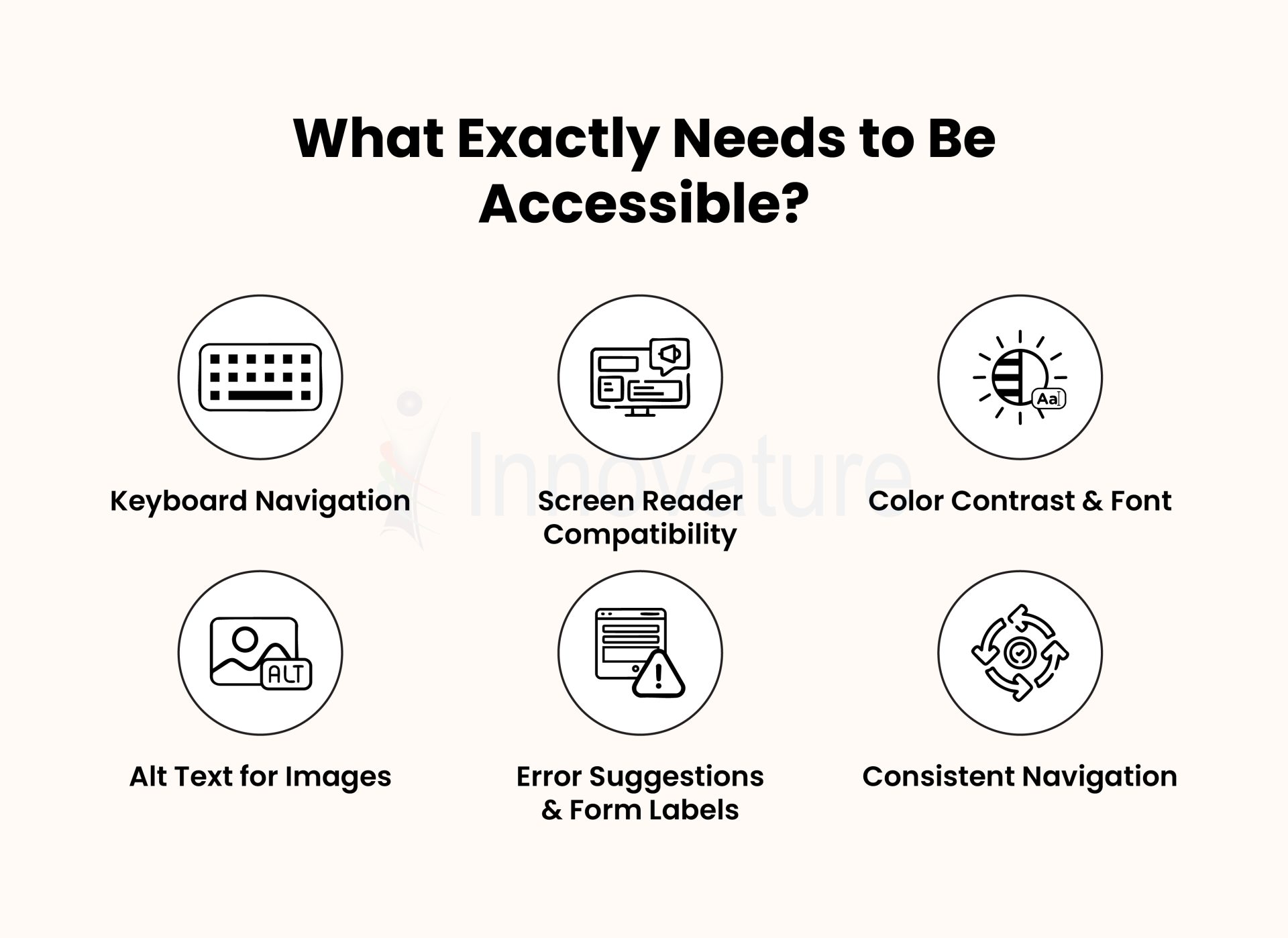
What Exactly Needs to Be Accessible?
Accessibility isn’t just about having a clean, readable homepage — it means ensuring that people with disabilities can seamlessly access your products and services, without barriers or frustration.
This includes:
- Keyboard Navigation: Can your website be navigated using only a keyboard?
- Screen Reader Compatibility: Is your content accessible to users relying on assistive technologies like TalkBack on Android?
- Color Contrast & Font Scalability: Is your text readable for users with visual impairments, and can it be scaled without breaking the layout?
- Alt Text for Images: Are your visuals meaningfully described for users who can’t see them?
- Error Suggestions and Form Labels: Are your input forms clear, and do they guide users in correcting mistakes?
- Consistent Navigation: Does your site follow a predictable structure that works for screen readers and people with cognitive impairments?

Key metrics that ensure your website’s accessibility.
Just because your navigation bar is clean and your image alt tags are consistent doesn’t mean your website is fully accessible. For example, users relying on screen readers need a website structured in a way the screen reader can interpret — not just labeled buttons, but dynamic content like pop-ups or slideshows that are correctly announced to users.
Accessibility isn’t only about proper navigation or layout; it’s about the entire user experience. Every interaction, from buttons to forms, must be accessible and understandable — even for users who can’t see or interact with your site in conventional ways.
Is Accessibility a Legal Requirement?
If you view accessibility merely as a checkbox to avoid fines, you’re missing the bigger picture.
From a user’s perspective, imagine trying to book a train ticket to visit a sick family member, using assistive technology to navigate the website. Now, what if the layout was confusing, and you accidentally booked the wrong destination? That’s a real-world problem accessibility can solve.
An accessible website doesn’t just make your content usable for everyone; it also makes your brand more inclusive, improving your public image. A commitment to accessibility shows that your company cares — about people, not just profits.
Boon or Burden? Don’t Find Out the Hard Way!
Now coming back to the giant in the room, the question — “Is accessibility a boon or a burden?” It should not be seen as a burden if it brings in more customers, attracting a broader audience, and helps in creating a more inclusive product. The boon lies in the fact that inclusive design is becoming more than just a trend; it’s a requirement that benefits everyone. From improving SEO (because accessible websites rank better) to opening up your product or service to a wider audience, making your digital presence accessible ensures long-term growth. So to answer your question, it is both in different ways. Interestingly, the answer cannot be just shortened down to a simple yes or no.
In America, the average ADA (Americans with Disabilities Act) compliance services can cost anywhere from $1500 to $5000 to make your website compliant. These costs vary depending on the size and the complexity of your website.
Now, the average American Joe might find this a bit expensive, but they’re leaving out the fact that this is nothing compared to the court costs of a product not being inclusive and failing to meet the necessary standard checks the rule has set forth. Don’t believe us? Here are the statistics on compensation filed against businesses for not being ADA compliant.
The average cost of auditing a website with 50 pages and basic accessibility testing ranges between $1,500 and $5,000. It may seem like a hefty amount, but listen to this: the legal payout one corporation had to make after a lawsuit was filed against them for their site being inaccessible was over $6,000,000. While these are special cases and don’t mean that missing one page will result in such a fine, it serves as a reminder that there are serious cases out there. This should encourage us to take action and ensure accessibility before it’s too late.
Coming back to EAA as the deadline for compliance with the European Accessibility Act (EAA) approaches in June 2025, businesses across Europe are scrambling to ensure that their websites, mobile apps, and other digital services are accessible to everyone, including people with disabilities. While this might seem daunting, it’s important to see it as an opportunity rather than a hurdle. The EAA can be a game-changer, both for your business and for your customers.
Consequences for Non – Compliance
For most businesses, it’s not the financial loss or the court expenses that matter most — it’s the damage to their reputation and the diminishing value of their brand. In addition to the fines, the reputational damage can be severe. If a customer or user finds your website or product inaccessible, they might take their business elsewhere. Worse still, they could voice their frustrations on social media, where negative sentiment can spread quickly.
The legal risks are also significant. As we’ve seen with ADA (Americans with Disabilities Act) lawsuits in the U.S., failing to meet accessibility standards can lead to lawsuits and settlements costing businesses millions of dollars. The European Accessibility Act is designed to encourage businesses to be proactive, but if you’re not prepared, the financial penalties for non-compliance could be substantial.
Innovature’s Commitment to Making Your Product Accessible
On the bright side, you don’t have to do this alone. There are accessibility experts
who are skilled at making your website or digital products accessible and ensuring they comply with the established guidelines, such as WCAG. Our QA engineers ensure your product is fully accessible and compliant with WCAG 2.1 (Level A & AA) and Section 508 standards. We use tools like TalkBack and Accessibility Scanner to identify and fix issues such as focus order, labeling, and color contrast, ensuring a seamless, inclusive experience for all users.