





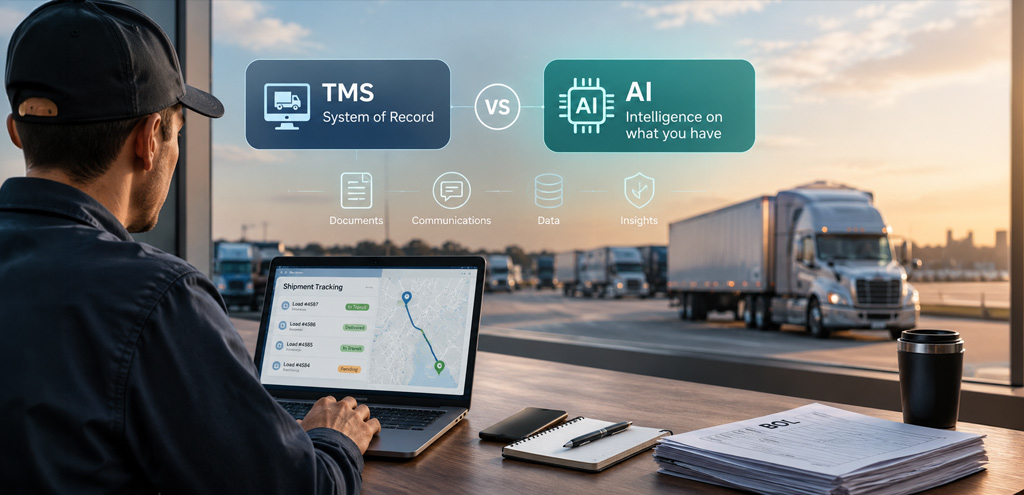
Introduction:
Artificial intelligence (AI) uses advanced analysis and logic-based approaches, such as machine learning, to analyze events, support and automate decisions and perform actions.
A branch of computer engineering known as artificial intelligence (AI) simulates cognitive processes using computer programs. It consists of a number of mathematically or logically based strategies for finding, capturing, and coding knowledge.
In a commercial setting, this can include simple automatic payroll templates, fraud detection, cross-selling opportunities, resource optimization, and intelligent robots performing office functions.
Is your company AI-ready? Let us evaluate the viability of your company right now.
Applications of AI
Companies are specializing in the following areas of AI. These categories cover some well-known technological applications that can be used in a variety of fields and technological contexts.
The major types of approaches, which cover the most widespread applications in AI, are:
- Probabilistic reasoning: These methods, which are frequently generalized as machine learning, help businesses make sense of the vast volumes of data they collect. This comprises methods designed to reveal hidden information stored inside a big amount of data (or dimensions). This is accomplished by looking for intriguing correlations within the data that are connected to a specific aim or label. This could involve, for instance, sorting through a lot of customer records to find the variables and their relationships.
- Computational logic: These methods, often known as rule-based systems, employ and expand the organization’s implicit and explicit know-how. They try to organize and record existing knowledge, frequently in the form of rules. Businesses can change these rules, but technology ensures that they are coherent (by ensuring that they don’t conflict with one another or result in circular reasoning, which is not always clear when working with tens of thousands of rules). The prevalence of rule-based strategies has increased as a result of a new set of compliance rules.
- Strategies for optimization: Traditionally employed by operations research teams, these techniques aim to find the best resource combinations under a set of constraints in a predetermined length of time in order to maximize benefits while controlling business trade-offs. Optimization solvers are sometimes referred to as prescriptive analytics techniques since they frequently produce actionable plans of action. Optimization approaches have been used for decades by operational research groups in asset-centric sectors (such as manufacturing and utilities) or roles (such as logistics and supply chain).
- Natural language processing (NLP): NLP offers simple ways for people and machines to communicate. NLP covers symbolic and sub-symbolic computational linguistic methods for identifying, parsing, understanding, automatically labeling, translating, and creating (or summarizing) natural languages. Speech-processing technologies, which are fundamentally signal-processing systems, are frequently used to handle the phonetic portion. Because of this, many software solutions frequently provide speech-to-text or text-to-speech applications. NLP systems also include additional knowledge resources like dictionaries or ontologies.
- Knowledge representation: Tools like semantic networks and knowledge graphs make it easier and faster to access and analyze data networks and graphs. These systems have a propensity to be more understandable for particular kinds of problems due to the representations of information they use. For instance, when one has to map out precise relationships among things, new knowledge representations offer fertile ground for AI algorithms (investigative research, process optimization, or manufacturing assets management, for example). These methods include hybrid learning, memorization, and graph traversal (while using composite AI systems). For instance, the usage of knowledge graph approaches dramatically increased in the first half of 2020.
For AI to succeed at your company, you must be able to use its machine learning, rules, optimization, NLP, and graph methodologies.
Challenges of AI
One of the main issues with AI in the modern workplace is the amount of hype and, as a result, false information that surrounds its use.
The media, the technology industry, and overzealous software suppliers have all contributed to a frenzy that makes it impossible for businesses to set realistic goals for their operations.
Projects that have no likelihood of success result from this. Business leaders with inflated expectations will then accuse science and technology of failing to turn lead into gold when, in reality, integration problems and security flaws as well as improperly harnessed or misunderstood applications of artificial intelligence (AI) to business outcomes are to blame.
Get Started with AI
You must have a comprehensive knowledge of the ultimate business impact before installing any AI systems or programs at your corporation.
- What do you hope the AI will accomplish?
● What is the business issue that artificial intelligence is intended to address?
● Who uses the technology most frequently?
● What will be the business procedure for hosting that method?
● How will the effect of using the technology be assessed (in comparison to more conventional methods)?
● How will the technology’s benefits be maintained and tracked? By whom?
● Which of the lines of business subject-matter experts can direct the formulation of the solution?
Any AI plan must first evaluate the organization’s preparedness and concentrate on that. Before implementing an AI program, it must enable learning and practical application.
If you are still confused, it might be a good idea to have a consultant who has expertise in giving AI insights along with the dev capabilities as your partner, to begin with. Innovature has more than 10 years of experience delivering AI projects with varying degrees of complexity. Contact us today to learn more on how we can Insource AI into your business for better scalability.